No products in the cart.
When a Speed Controller Makes Sense on a Conveyor
Most conveyors are set up to run at one speed. That works well when the product, the volume and the machines around the conveyor never change. In a packhouse or food plant, they usually do.
A speed controller, also called a variable speed drive or VSD, lets you adjust how fast an electric motor runs. On a conveyor, that means you can match the belt to what’s happening on the line, rather than the other way round. Here’s when it makes sense, and what to think about first.
Signs a speed controller could help
- Packers can’t keep up at some times of the day, and stand waiting at others. Being able to slow or speed the line to suit the crew keeps product moving without pile-ups.
- Product size or type changes through the season. Different fruit sizes, pack types or products often run best at different speeds.
- Product tips, bumps or spills at start-up. A controlled, gradual start is gentler on product and on the drive than switching straight to full speed.
- One conveyor feeds another machine that runs at a different rate. Adjusting the conveyor lets you match the feed to the machine.
- You’re changing speed by swapping sprockets or pulleys. A speed controller lets you make the same change in seconds.

A real example
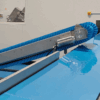
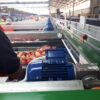
At one strawberry packhouse, EQM built a 15-metre sorting and packing conveyor for up to 20 people working either side. It’s driven by an STM gear drive with a speed controller, so the line can run at whatever speed suits the number of packers that day. With the speed matched to the crew, output rose to about 1,800 punnets an hour. Read the case study.
What a speed controller can and can’t do
A speed controller changes how fast the motor turns. It can give you smoother starts and stops, a range of speeds from one drive, and easier control from a keypad or automation system.
It can’t fix a conveyor that’s the wrong design for the job. If product is being damaged at a transfer, or the conveyor simply isn’t big enough for the volume, speed alone won’t solve it. It’s also worth remembering that running a motor very slowly for long periods can affect cooling on some motors, so the motor and gearbox need to suit the speed range you plan to use.
What to check before fitting one
- The motor. Check it’s suitable for use with a speed controller, and note the voltage, power and current from the nameplate.
- The supply. Speed controllers are available for single-phase or three-phase input. Know what you have on site.
- The speed range you need. Work out the slowest and fastest speeds the line will run at, so the motor and gearbox ratio can cover them.
- The environment. Heat, dust and moisture all matter. The controller needs to be installed somewhere suitable, or in a suitable enclosure.
- Installation. Speed controllers must be installed and wired by a qualified electrician.
Speed controllers from EQM
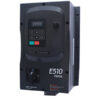
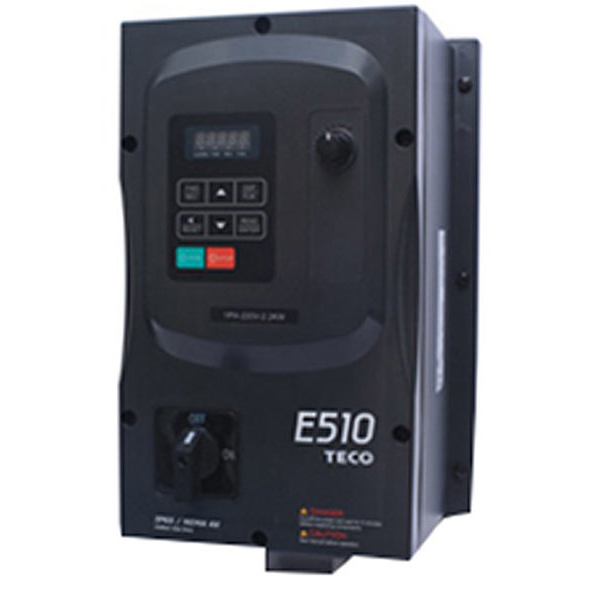
EQM supplies TECO speed controllers, including the E510 vector drive for three-phase motors from 0.37kW to 18.5kW, and the compact L510 for smaller motors. View the TECO E510.
If you’re not sure whether speed control is the right answer for your line, send us the motor nameplate details, what the conveyor carries and what you’re trying to fix. Email [email protected] and the team will help you work it through.
Eliminating bottlenecks. Boosting productivity in every industry.
Drive motors and conveyor systems that work.
0800 147 847 | [email protected] | eqm.co.nz